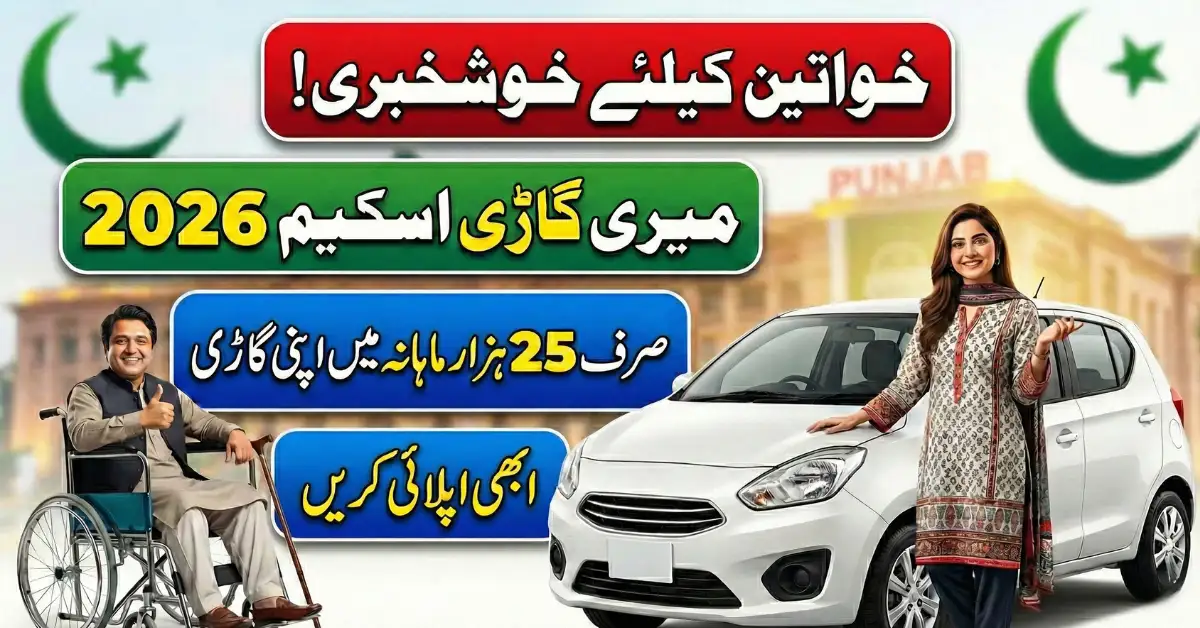
The Punjab government has officially rolled out the CM Punjab Meri Gari Scheme 2026, a major public transport initiative aimed at making car ownership possible for middle- and low-income citizens. Announced under the leadership of Chief Minister Maryam Nawaz, this scheme introduces subsidized car financing with easy monthly installments, transparent balloting, and a fully digital application system.
With rising fuel and transport costs, this initiative is being seen as a timely relief for students, working women, and job seekers across Punjab.
What Is CM Punjab Meri Gari Scheme 2026?
Purpose of the Scheme
The scheme is designed to provide affordable vehicles to eligible Punjab residents through bank-backed loans at a subsidized markup. The government’s goal is to improve mobility, support self-employment, and reduce dependence on expensive private transport.
Unlike traditional financing, this program removes middlemen and ensures direct access through official channels.
Key Features of Meri Gari Scheme 2026
Easy Installments and Low Markup
Applicants can get a car on monthly installments starting from Rs. 25,000, with repayment periods ranging from 3 to 7 years. The markup rate remains subsidized, around 6–8%, significantly lower than market rates.
Transparent Digital Process
All applications are submitted online and shortlisted through a computerized balloting system. This ensures fairness and transparency.
Special Quotas
Reserved allocations are available for women, students, and differently-abled individuals to ensure inclusive access.

Who Can Apply for CM Punjab Meri Gari Scheme 2026?
Eligibility Criteria
To apply, candidates must meet the following requirements:
-
Age between 20 and 50 years
-
Valid Punjab domicile and CNIC
-
Minimum monthly income of Rs. 30,000
-
Clean bank and loan record
-
Ability to provide income proof

Both salaried and self-employed individuals are eligible.
How to Apply Online for CM Punjab Meri Gari Scheme 2026
Step-by-Step Application Process
The Punjab government has introduced a dedicated online portal for registrations. Applicants need to:
-
Register using CNIC and a registered mobile number
-
Select vehicle category (new or certified used car)
-
Fill in income and employment details
-
Upload required documents
-
Submit the form and save the tracking ID
Application status updates are shared via SMS and the online dashboard.
Required Documents for Registration
Applicants should prepare the following documents in advance:
-
CNIC (front and back)
-
Proof of income (salary slips or bank statement)
-
Recent utility bill

-
Passport-size photographs
-
Driving license (preferred, not mandatory)
Installment Plan and Benefits
For a car worth approximately Rs. 1.6 million, applicants need a 15–20% down payment, while the rest is covered through easy installments. Many beneficiaries are expected to use the vehicle for ride-hailing or local transport services, helping them recover costs and generate income.
Latest Updates on CM Punjab Meri Gari Scheme 2026
According to official sources, registrations are open for a limited time, and the first balloting phase is expected soon. Applicants are advised to complete verification early to avoid rejection.
Conclusion
The CM Punjab Meri Gari Scheme 2026 stands out as one of Punjab’s most impactful welfare-driven financing programs. With low installments, transparent procedures, and strong government backing, it offers a realistic path to car ownership for thousands of families. Those meeting the criteria should apply promptly and ensure all documents are accurate.
FAQs for CM Punjab Meri Gari Scheme 2026
1. Is the Meri Gari Scheme interest-free?
No, but it offers a highly subsidized markup of around 6–8%.

2. Can women apply separately?
Yes, special quota seats are reserved for women applicants.
3. Is a driving license mandatory?
It is preferred but not mandatory at the application stage.
4. Can used cars be financed?
Yes, certified used cars up to 3 years old are allowed.
5. How will applicants be selected?
Selection is done through a transparent computerized balloting process.